
Indonesian Split Areca Nut Grades Explained
Learn how to discuss split areca nut grades from 60/65 to 90/95, define good-cut criteria, and agree measurable acceptance terms with a supplier.
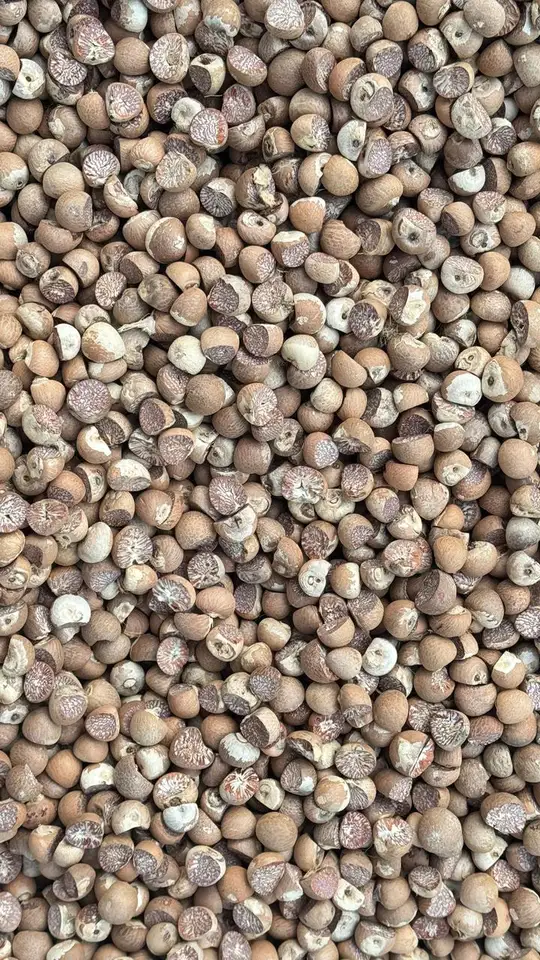
Indonesian split areca nut is often discussed using compact commercial labels such as 90/95, 80/85, 70/75 and 60/65. Betel.trade uses these labels in its catalogue, alongside specification fields. The label is a starting point for discussion; it should not replace a definition of what will be measured and accepted for your order.
This distinction matters when comparing suppliers. Two offers with the same label may use different sorting criteria, sample selection or tolerances. A buyer should ask each seller to explain its classification before treating the offers as equivalent.
Ask what the grade actually measures
Begin with the good-cut definition. Ask what qualifies as an acceptable piece and what moves a piece into another category. Clarify whether the percentage is calculated by weight or by count, and identify the sample quantity used in the calculation. Keep the answer in the specification rather than only in a chat message.
Do not describe the grade as a universal purity standard or an official certification unless the supplier names the applicable standard and supports that claim. Commercial grading, laboratory testing and regulatory compliance answer different questions. One number cannot substitute for all three.
Separate cuts, moisture and foreign matter
A cut classification does not establish a moisture result. It also does not tell the buyer how stones, dust or other foreign material will be assessed. Use separate lines for each agreed parameter. A quotation is easier to evaluate when each line includes a limit, a measurement method and a point in the transaction when it is checked.
For appearance, attach clear reference photographs or retain an approved physical sample. Describe unacceptable defects in words as well. Avoid instructions such as “best color only,” which leave the receiving team and sorting team to invent their own interpretation.
Use a worked calculation to remove ambiguity
For illustration only, suppose the parties agree to classify a one-kilogram sample by weight. If 900 grams meet their written good-cut definition, the calculated result is 90 percent for that sample. This arithmetic does not prove the quality of a whole shipment and is not a claim about any current Betel.trade batch.
The example shows why the denominator matters. Counting pieces instead of weighing them can answer a different question when piece sizes vary. Ask for the original measurements, not just the final percentage, so the result can be checked and compared with the agreed method.
Agree the inspection and acceptance process
Decide who takes samples, when the lot is available, which bags may be opened and who receives the report. If a third party will inspect, share the purchase specification with that inspector before the visit. A report that measures a different parameter may be accurate but still fail to answer the contract question.
- Identify the lot and the sample reference.
- List the grade definition and each separate quality limit.
- Agree what happens if results fall outside the specification.
- Keep approved changes in one dated revision.
Request a grade with supporting requirements
Instead of asking only for an 80/85 price, send the requested commercial label together with the written cut criteria, quantity, moisture requirement, packaging and destination. If you do not yet have a technical definition, say so and request the supplier’s proposed specification and sample for review. That creates a clearer basis for the next discussion.
Reference: Betel.trade split areca nut catalogue