
Meet Areca Catechu, the Palm Behind Pinang
Explore the areca palm, its place in tropical agriculture, and why understanding the living plant helps explain Indonesian betel nut production.
A bag of Indonesian betel nut begins with a perennial palm, not an annual field crop. Areca catechu connects two very different timescales: the long development of a living planting and the shorter cycle of collecting, drying and selling a harvest. That contrast helps explain why a sudden order cannot simply create an immediate crop.
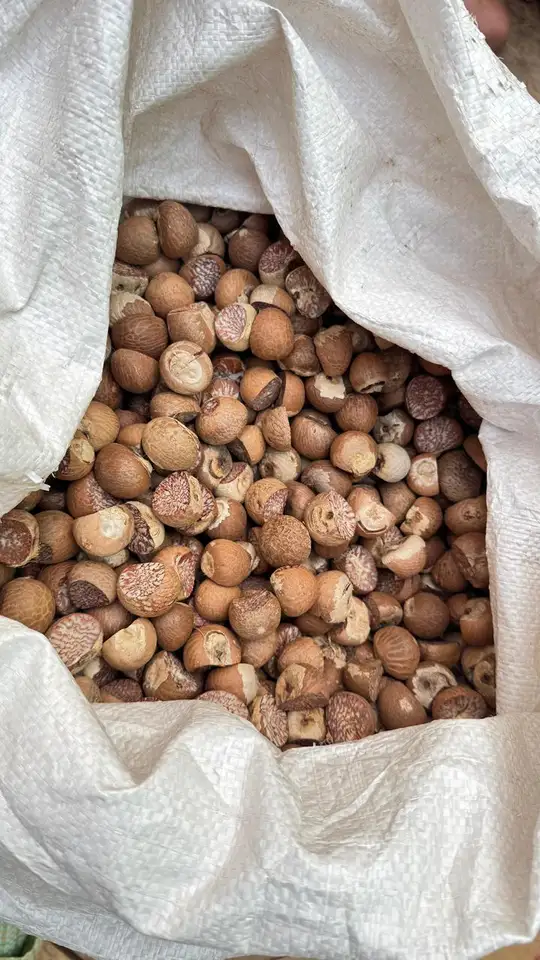
Looking at the palm also clarifies what an export photograph leaves out. The seed is only one part of a larger agricultural system involving planting material, field conditions, harvesting labor and several streams of plant residue.
A tropical palm with a familiar seed
Kew recognizes Areca catechu as a species of palm. It is associated with tropical cultivation and produces the fruit from which commercial areca kernels are obtained. The trade name betel nut refers to this seed rather than to the leaf of the unrelated betel vine.
For a general reader, the most useful distinction is between a living species and a commercial form. Whole kernels and split cuts do not represent separate species. Their appearance reflects processing after harvest, alongside natural differences in the original material.
Reference: Kew: Areca catechu
Why perennial agriculture needs a longer view
A planting decision commits land, labor and money well before the eventual harvest is sold. A nursery purchase is therefore different from buying a finished commodity. The grower needs a credible seed source and locally appropriate guidance, while the trader needs a current specification for an existing lot.
This separation is easy to lose in promotional writing. A promising variety does not guarantee a particular export grade, and a profitable shipment does not prove that a new planting will earn the same return. They are different decisions with different evidence requirements.
The same species can face different field conditions
Plant identity alone cannot explain field performance. Rainfall distribution, soil condition, access for workers and the surrounding cropping system all belong in a site assessment. Rather than transplanting a cultivation recipe from another country, a grower should discuss the actual site with a qualified local adviser.
Useful observations include where water accumulates after rain, how easily workers can reach the palms and which tasks become difficult during busy harvest periods. These practical details turn a general crop description into questions that can be investigated before a large investment.
Think beyond the kernel
The harvested fruit includes material removed before a dried kernel reaches a sack. Leaf sheaths are a separate part of the palm and can enter different material-use projects. Keeping these streams distinct makes discussions of processing, waste and possible value addition more precise.
The palm is therefore a useful starting point for understanding the industry: biology explains the material, while records and measurements explain a commercial lot. Neither a farm story nor a close-up photograph can replace the other.