
Areca Nut Husk Fiber: A By-Product Worth Studying
Explore potential material uses for areca husk fiber, the practical questions behind processing trials, and the limits of sustainability claims.
Dehusking areca fruit leaves a fibrous material separate from the kernel. Instead of treating it only as a disposal problem, researchers and material developers can investigate whether a defined husk stream is useful in another process.
The opportunity is real enough to examine, but it needs a narrower question than can areca waste replace plastic? A material trial must identify the fiber, the intended application and the tests that would show whether the result is useful.
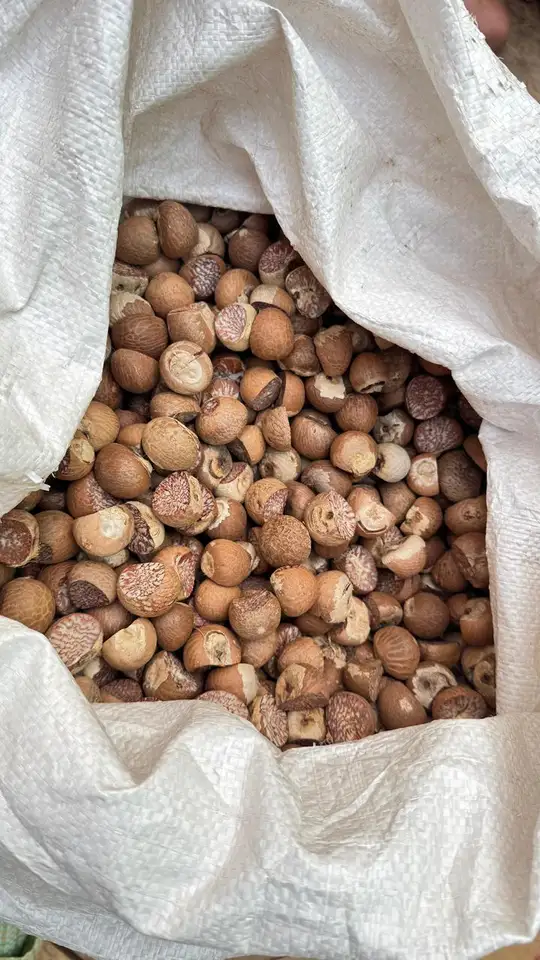
A research direction, not a universal replacement
ICAR’s 2025 farmer-innovation compilation includes a bio-leather project using fibers from pineapple leaves and arecanut husks. It provides an example of a development pathway involving plant residues, rather than evidence that untreated husk can substitute for any finished material.
A project reported elsewhere is not proof that the same process is available from an Indonesian commodity supplier. Technology access, formulation, equipment and local input quality would all need separate investigation before making a commercial offer.
Reference: ICAR: Farmers’ Innovations 2025, bio-leather example
Begin with a defined feedstock
A trial batch should state whether it contains whole husks, extracted fiber or a prepared intermediate. Record how it was collected, dried and stored, and what unwanted material is present. Otherwise a successful sample can be impossible to reproduce at a larger scale.
Keep husk fiber distinct from kernel fragments and leaf sheaths. The generic label agro-waste is useful for a broad discussion but too vague for an engineering specification. A downstream developer needs to know exactly what they are being asked to evaluate.
Test the requirement of the actual product
The relevant questions depend on the application. A proposed board, molded item or flexible composite will need different performance criteria. Strength alone might not answer questions about moisture behavior, durability, processing consistency or end-of-life handling.
Start with a small, documented comparison against the incumbent material. Record failure as carefully as success: a material that performs well in one dry test might be unsuitable for the intended service conditions. Technical suitability cannot be established by a photograph of the fiber.
Include collection costs and honest environmental claims
Residues are not necessarily cost-free once sorting, transport, drying and storage are included. The collection radius and continuity of supply may determine whether a project makes sense. A pilot should track those costs alongside technical performance.
Likewise, natural fiber does not automatically make a finished composite recyclable, compostable or harmless. Binders, treatments and disposal conditions matter. Describe the measured result and the remaining questions rather than promoting an untested project as a ready-made sustainability solution.