
Arecoline and Tannins: Reading Areca Nut Research
Understand the difference between areca nut compounds, laboratory findings and proven treatments, and why natural ingredients still need safety evidence.
Articles about areca nut sometimes move too quickly from a chemical name to a promised benefit. Arecoline and tannins may appear together in a description, but they are not interchangeable substances, and identifying a compound does not establish a safe use.
For readers interested in research, the key skill is separating material composition, experimental activity and evidence of a useful finished product. This article explains that distinction without presenting areca nut as a medicine.
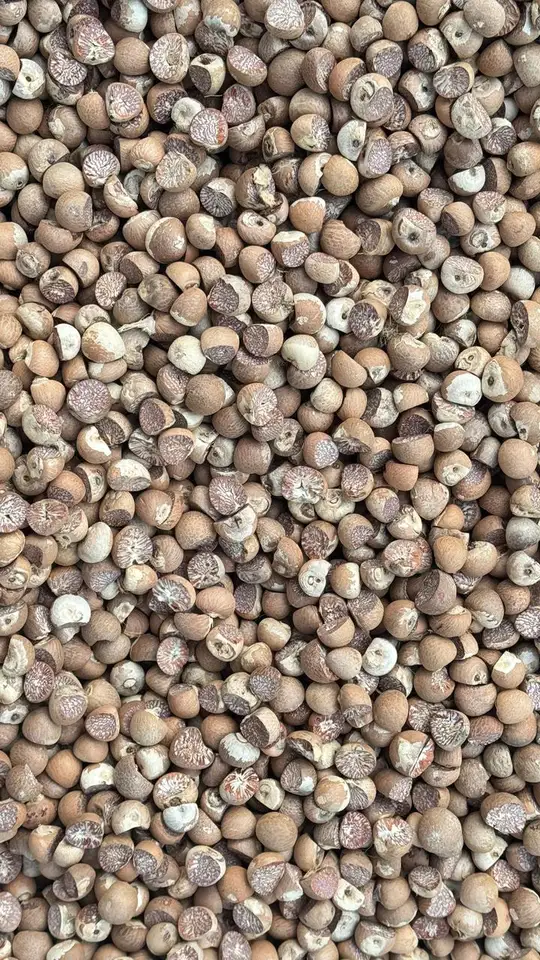
One compound is not the whole nut
Arecoline is an alkaloid associated with areca nut. IARC evaluated it separately from the whole nut and classified arecoline as possibly carcinogenic to humans, Group 2B. The whole areca nut already has a Group 1 classification: carcinogenic to humans.
Those classifications should not be swapped. The classification of an isolated compound is not a reason to downgrade the established risk of chewing the whole material. Nor does a description such as natural alkaloid communicate a safety guarantee.
Reference: IARC: questions and answers on arecoline evaluation
Read tannin claims as specific analytical claims
Tannins are a group of plant compounds rather than a single uniform ingredient. When a report describes tannin content, the useful questions concern the sample, extraction procedure and analytical method. A percentage without its measurement basis is difficult to compare with another result.
For a commercial research inquiry, request the actual report rather than borrowing a number from a general article. Make clear whether the result describes raw kernel, a dried extract or another preparation. These materials are not interchangeable merely because the same plant name appears on the label.
Follow the distance from an experiment to an application
A measured effect in a laboratory is an observation under defined conditions. Turning it into an application involves additional questions about reproducibility, exposure, unwanted effects, manufacturing and applicable approval requirements. A promising result is a starting point for investigation, not the final answer.
Readers should be particularly cautious when an article substitutes words such as antioxidant or antimicrobial for an explanation of what was actually tested. Ask whether the work studied a cell system, a material sample, an animal model or people, and whether the claimed outcome matches the experiment.
What a responsible research brief contains
A useful brief identifies the plant part, sample origin, processing history, test method and intended application. It separates measured findings from hypotheses and records limitations rather than hiding them. That structure helps a laboratory decide what work is still needed.
For Betel.trade’s journal, discussing compounds means explaining research literacy, not claiming therapeutic effectiveness. Anyone developing a product needs qualified technical and regulatory review for that specific application. A commodity description cannot supply that approval.