
Areca Nut Uses, Benefits and Health Risks
Separate the commercial uses of areca nut and palm by-products from health claims, with clear context on the cancer risks of chewing areca nut.
The word benefits needs careful handling in an article about areca nut. A crop can have commercial value, cultural importance and research interest without being beneficial to eat or chew. Those are separate questions, supported by different kinds of evidence.
Here, benefits means possible economic or material value where a use is demonstrated and appropriate. It does not mean that Indonesian areca nut, supari or pinang is a health supplement. Origin, natural appearance and traditional use are not evidence of safety.
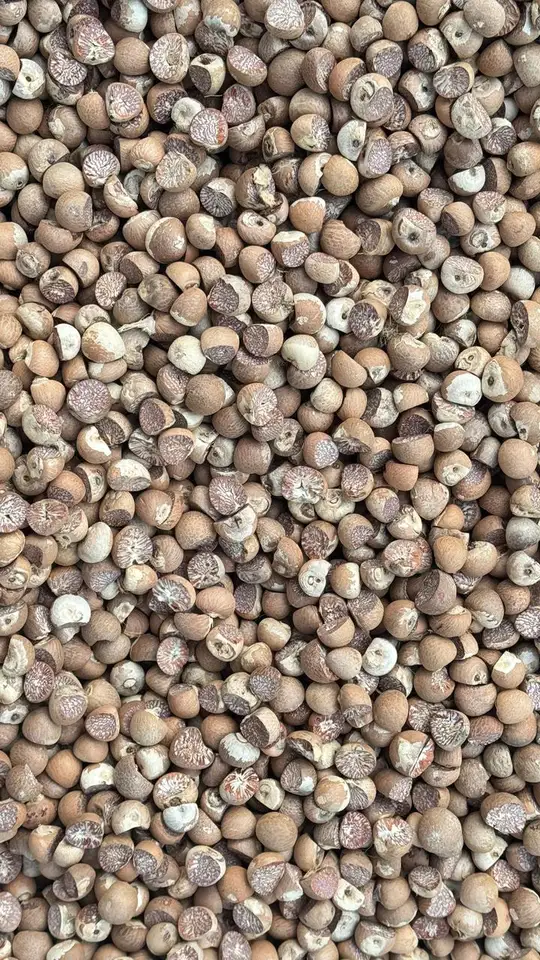
The health risk must be stated clearly
The International Agency for Research on Cancer classifies areca nut as carcinogenic to humans. Chewing areca nut is not made safe by leaving tobacco out of a preparation. The evidence also links chewing with oral submucous fibrosis, a serious condition affecting the mouth.
This article does not recommend consumption, provide a safe chewing dose or endorse areca products for treating illness. People concerned about use or mouth symptoms should seek professional healthcare advice rather than rely on commercial descriptions of the commodity.
Reference: IARC Monographs Volume 85: betel-quid and areca-nut chewing
Commercial value is a different kind of benefit
Cultivation, collection, drying and trading can create paid work and business revenue. Whether those activities actually benefit a household or enterprise depends on costs, prices, working conditions and the ability to sell suitable output. Revenue alone is not the same as a positive net return.
A useful economic discussion therefore asks who bears rejected-lot losses, how labor is compensated and how reliably payments arrive. These questions are more informative than declaring that a natural commodity is automatically profitable for every grower.
Palm by-products have their own applications
ICAR has documented a community project converting areca palm leaf sheaths into molded plates. That is an example of using a specific palm residue; it is not a health benefit of the seed and does not mean that every areca by-product has the same properties.
For a proposed local project, the next questions are practical: what material is available, what processing is needed and who will accept the finished output? Costs, hygiene, testing and disposal conditions belong in that assessment before environmental claims are made.
Reference: ICAR: community-based areca leaf sheath plate making
Research interest is not a treatment claim
A laboratory experiment may investigate a compound or extract under controlled conditions. That does not establish that chewing the whole nut prevents disease or improves health. Experimental concentration, exposure and safety assessment differ from everyday use.
The responsible conclusion is specific: describe the commercial activity or material application being considered, cite the relevant evidence and retain the health warning. A broad list of unqualified medicinal benefits would blur distinctions that readers need to understand.