
Betara Areca Nut: A Jambi Origin Story
Meet Betara areca nut from Tanjung Jabung Barat, Jambi, and learn why cultivar identity, planting material and export-lot quality are different questions.
Betara gives Indonesian areca nut a specific origin story within Jambi. Rather than being only a broad export label, the name appears in agricultural research connected with Tanjung Jabung Barat. That makes it a useful starting point for learning how local plant populations become the subject of selection and evaluation.
The story should still be told with care. A documented variety, a nursery’s planting material and a commercial lot of dried kernels are related subjects, not interchangeable certificates.
A local population studied in Tanjung Jabung Barat
An agricultural study on Betara examined relationships between fruit production and vegetative and generative characteristics in a Jambi population. The research connects the variety discussion with observed palms and defined measurements rather than a generic claim about Indonesian quality.
A study of that kind provides context for crop improvement. It does not certify a seller’s current stock or establish the performance of an unrelated planting. Readers should retain the distinction between the population studied and the goods being offered.
Reference: Ministry of Agriculture repository: research on Betara production traits
Following the name back to planting material
For someone establishing a planting, the important question is whether the supplied seeds or seedlings have a documented source consistent with the claimed identity. A name printed on an advertisement cannot answer that alone.
Keep the source record with the nursery batch and subsequent field records. This gives future observations a useful reference point. Without that continuity, differences in field performance can be difficult to interpret even when everyone uses the same variety name.
Following a harvested lot forward to trade
Once harvests enter collection and processing, the record needs to explain whether material remains segregated or is combined. If several sources are mixed, the resulting lot should not inherit a precise cultivar claim simply because one source was identified.
A dried export lot also needs its own inspection and specification. Origin can add context, but it cannot substitute for examining the actual material, measuring relevant properties and documenting how the sample represents the shipment.
A stronger origin story uses fewer unsupported promises
For a Jambi-based business, the useful story is the connection between local agriculture and careful handling of commercial material. It becomes stronger when the article says exactly what a source establishes and what must still be checked.
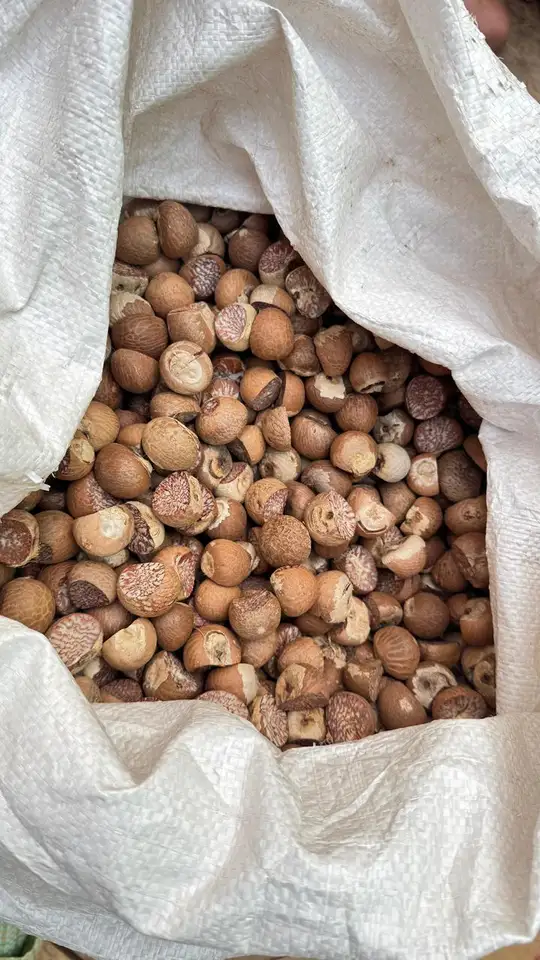
Our existing gallery illustrates areca nuts, not authenticated Betara planting material. The photograph should therefore be read alongside the article as a general illustration, not as visual proof of the cultivar discussed.