
Indonesian Areca Nut Varieties: Beyond Trade Names
Explore Betara, local selections and names such as Bulawan and coin betel nut, and distinguish documented cultivars from commercial descriptions.
Lists of Indonesian betel nut varieties often mix three different things: documented cultivars, local population names and shapes created during processing. That makes a simple ranking of the best varieties less informative than it first appears.
A grower selecting planting material and a processor selecting dried kernels need different information. Separating those decisions is the most useful way to read variety names without overinterpreting them.
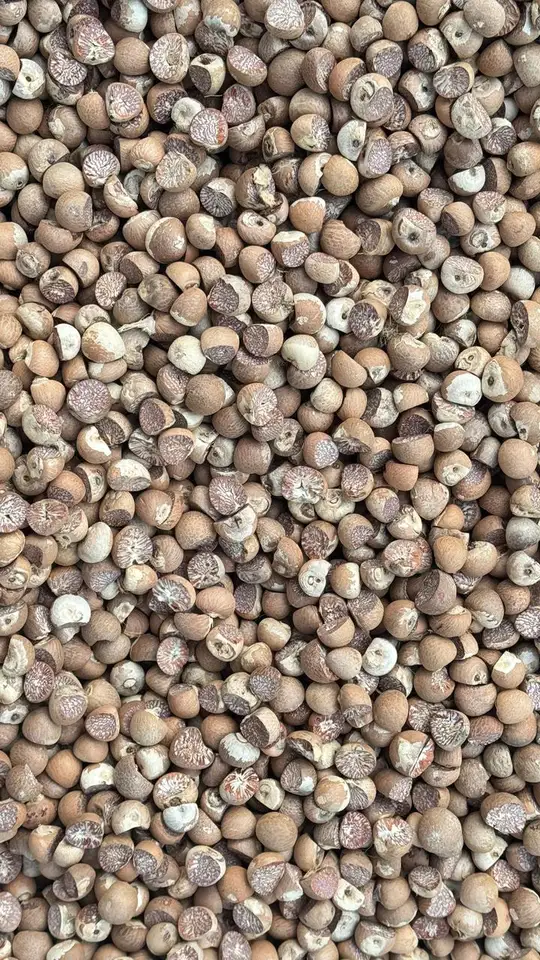
Betara provides a documented starting point
Indonesia’s agricultural research repository contains an official publication on the Betara variety associated with selection in the Betara area of Jambi. It is an example of a name that can be connected to a published agricultural description.
That documentation does not establish the identity of every sack offered as Jambi pinang. A cultivar claim in a commercial shipment still needs an origin record. Nor does it guarantee that a processed lot meets a buyer’s moisture, size or appearance requirements.
Treat other names according to their evidence
Readers may encounter names such as Bulawan in online variety lists. This journal does not assign that name a certified status, origin or performance figure without a matching primary description. A list copied across websites is not the same as independent verification.
The right response is not to assume that an unfamiliar name is false. It is to label what is known and request the missing documentation before attaching agronomic or commercial claims to it.
Coin, whole and split can describe form
Coin-style slices, whole kernels and split pieces are product descriptions. Their shape can result from cutting and selection after harvest, so it should not automatically be presented as evidence of a separate botanical variety.
Keep form and planting identity in separate fields on a product sheet. A buyer can then request a particular cut without unintentionally making an unsupported cultivar requirement, while a grower can evaluate planting material without confusing it with export grading.
Best depends on the question being asked
For planting, the questions concern local suitability, the credibility of the seed source and evidence under comparable growing conditions. For processing, they concern the supplied material and the receiving specification. Neither decision can be settled by a single impressive yield figure.
A responsible variety article explains the evidence behind each name and the limits of its relevance. That approach leaves room for Indonesia’s local diversity while avoiding an artificial league table of supposedly superior nuts.