
From Farm to Export: Indonesian Areca Nut’s Journey
Follow Indonesian areca nut through harvesting, dehusking, drying, sorting and shipment, including the handovers that determine traceability.
The journey from an areca palm to an export sack contains several transformations. Fruit is harvested, material is separated and dried, and the resulting kernels are sorted and assembled into lots. Transport and documentation then connect those lots with a destination.
This is a general explanation of the chain, not a claim that every Indonesian processor follows an identical sequence or that Betel.trade owns every stage. The actual process should always be described from its records.
Harvest and intake establish the starting point
At the beginning, the material has a source, a collection date and a physical condition. Recording those details creates a reference for later questions about output and handling. If fruit from several sources is combined immediately, that fact should be recorded too.
An intake weight is useful only when its basis is clear. Whole fruit, husked material and sacks with packaging included are different measurements. Name the material and weighing stage before comparing it with a later figure.
Preparation changes form and mass
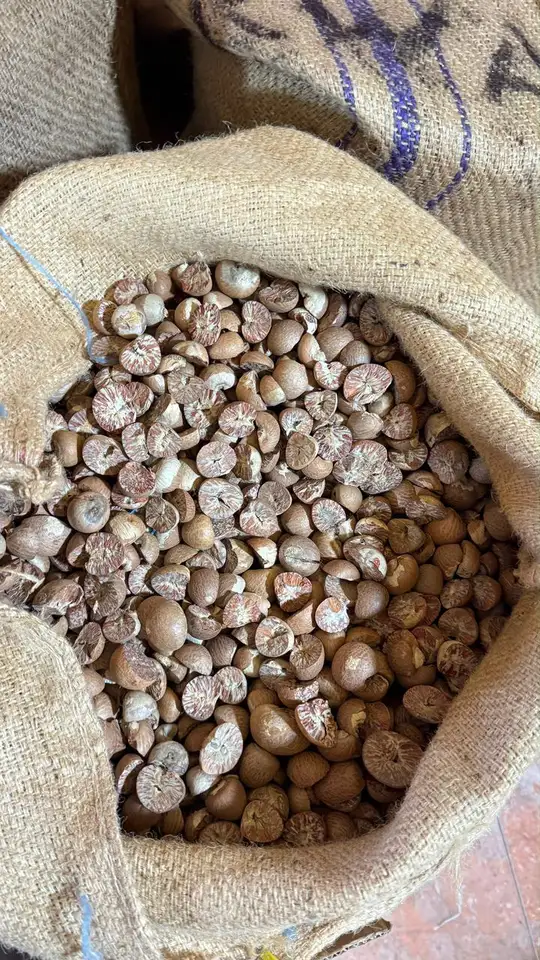
Dehusking separates fibrous outer material, while drying reduces water in the material being prepared. Cutting and sorting can then divide the output into different commercial fractions. The order and methods depend on the process and product.
A good process record explains the transitions rather than hiding them inside one yield percentage. It accounts for useful output, residues, rejects and samples so that a difference in mass can be interpreted correctly.
Reference: Areca nut drying methods
A commercial lot needs an identity
Once material is assembled for an offer, assign a reference that follows the specification, sample and packing records. If the lot changes, update the relationship rather than leaving an old sample attached to new material.
This stage is where a broad agricultural description becomes a specific commercial commitment. The receiver needs to know what the lot contains and how the evidence represents it, not just which country grows the crop.
Dispatch connects physical cargo with paperwork
The packed quantity, identifying marks and product description should align with the agreed documents. Inspection and shipment preparation are separate responsibilities that need to be assigned before loading, particularly when several businesses handle the cargo.
A successful handover leaves a clear chain from the approved lot to the dispatched goods. The farm story provides context, but the shipment records explain the transaction. Both are useful when their roles remain distinct.