
Coin-Cut Areca Nut: A Shape, Not a Quality Guarantee
Understand coin-style areca nut slices, thickness and fragment checks, and why a processing description should not be confused with a botanical variety.
Coin-cut areca nut describes a visual idea: relatively flat, disc-like pieces rather than intact kernels or irregular splits. The term may be convenient in conversation, but it leaves important details unstated.
Because a shape can be created during processing, coin should not automatically be treated as a cultivar name. A useful discussion focuses on the actual cut, its consistency and the requirements of the intended process.
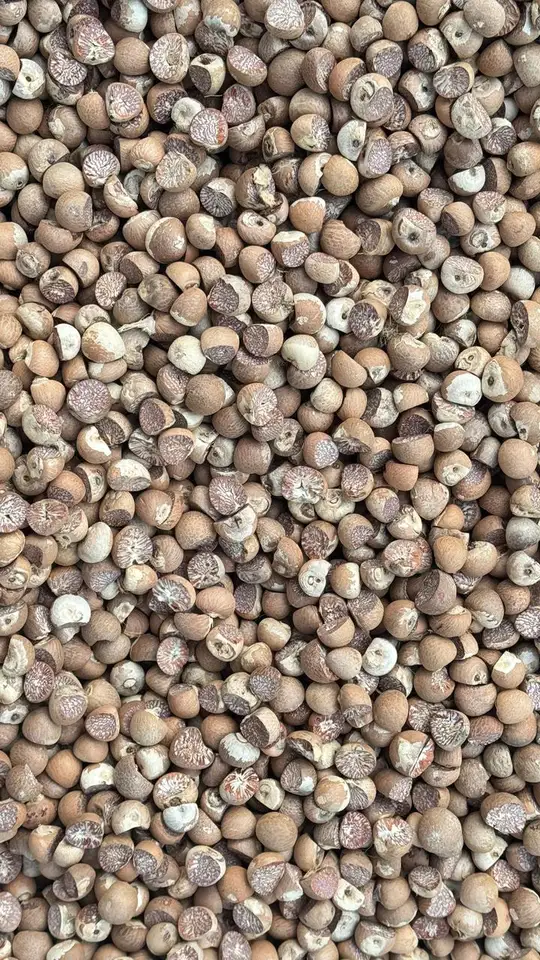
Turn a visual word into measurable characteristics
Ask for the thickness range, diameter or size distribution and acceptable proportion of broken or irregular pieces. State how these characteristics will be assessed. A handful of neatly arranged slices is not enough to explain the composition of a bulk lot.
The measurement method matters as much as the numbers. Counting pieces, weighing fractions and judging a photograph answer different questions. Choose a method that the supplier and receiver can reproduce.
Cutting changes the assortment
A cutting operation can produce regular pieces alongside fragments and fines. Evaluating only the preferred slices hides part of the output. For a processing trial, record all fractions so that the result shows both the desired material and the material needing another destination.
This also helps compare alternatives fairly. A more visually uniform cut may require additional selection work; whether that is worthwhile depends on the receiving specification and economics, not appearance alone.
Shape does not establish condition or safety
A consistent disc-like appearance does not prove moisture level, treatment history or suitability for an end use. Those questions require their own records or tests. The same is true for cultivar identity: processing form cannot authenticate planting origin.
Describe the source material and any relevant preparation separately from the cut. If a supplier uses a local term differently, agree on an annotated sample or product sheet instead of assuming the name has one universal definition.
Use a reference that represents the offered lot
For a meaningful comparison, the sample should be selected from the proposed material using an agreed approach. Preserve the sample reference and the written acceptance terms together. A display sample with no lot connection is useful for discussing shape but not for accepting a shipment.
Betel.trade’s existing photos are not a dedicated coin-cut product catalogue. A discussion of this form should therefore begin with a clear requirement and availability confirmation, not an assumption that the article announces a stocked product.
Reference: Whole and split areca nut: product-form comparison