
Jambi Areca Nut: Connecting Growers and Export Trade
Follow the roles behind Jambi’s areca nut supply chain, from local collection to dried lots, and learn what location alone does not tell a buyer.
Jambi’s areca nut story is best understood as a sequence of people and handovers. A grower’s harvest, a collector’s incoming stock and a packed export lot are not the same operational unit, even if each is described as Jambi pinang.
Betel.trade is based in Tungkal, Jambi. That location gives context to this journal, but this article is an explanation of supply-chain roles, not a claim that every lot comes from a particular farm or that all processing stages are owned by one company.
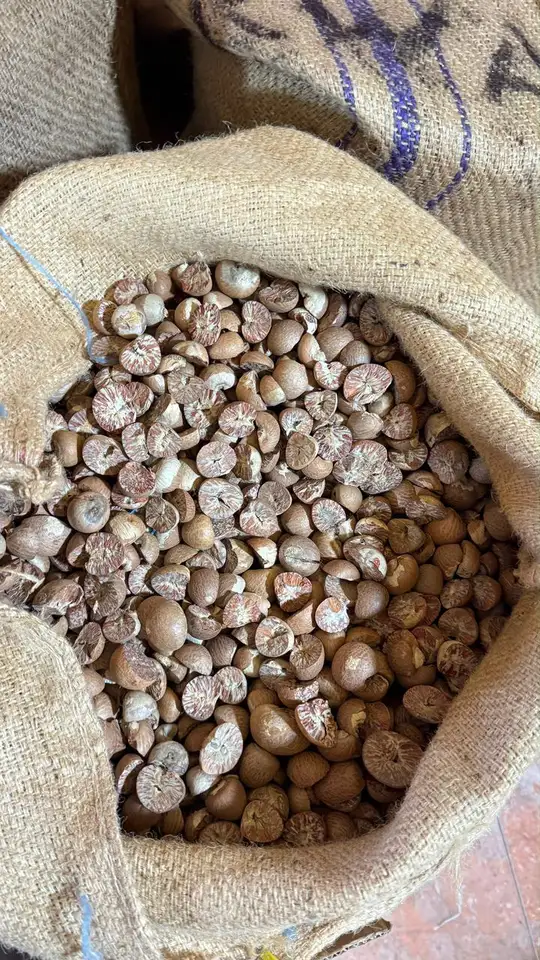
Why Jambi is more than a port label
Betara agricultural research provides a documented link between areca and Tanjung Jabung Barat in Jambi. That local crop context is distinct from the route chosen to move a finished shipment.
A commercial description should make the difference clear. Growing origin concerns the material’s source; processing location concerns where it was prepared; dispatch location concerns transport. Those places may be connected without being identical.
Reference: Betara: a documented Jambi areca nut story
Collection is where identity can become less precise
A collection point may receive material from more than one source or on several dates. If incoming material is combined, the record needs to explain what entered the resulting lot. Otherwise an increasingly large batch can retain an origin claim that no longer describes all its contents.
Simple intake references can preserve useful information without implying farm-level traceability that does not exist. The goal is an honest chain of records, not a more impressive label than the evidence supports.
Preparation connects agricultural material to a specification
Drying, dehusking and sorting turn incoming material into a form that can be compared with a receiving requirement. The exact sequence should be recorded for the process actually used rather than assumed from a generic export diagram.
At each handover, quantity and condition records help explain changes. If one team records gross sack weight while another records net dried output, the difference needs to be reconciled before it is treated as a shortage.
The final handover needs its own evidence
Before dispatch, the packed lot should be connected to the approved description, inspection records and shipment documents. A good origin story does not replace that final check. It provides context, while the lot records establish what is being shipped.
For readers interested in Jambi supply, the most useful questions concern these connections: who collected the material, how it was prepared, where it was combined and which records follow the finished lot.